Showing posts with label Impossible Trinity. Show all posts

Monday, June 20, 2016

Rexit


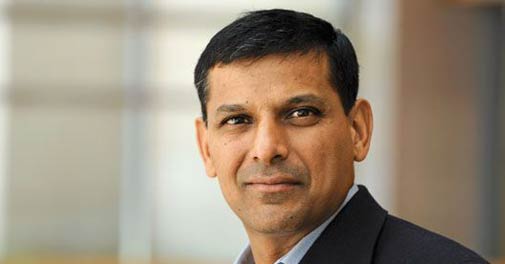
Yesterday, June 18, 2016, Raghuram Rajan in an email address to his staff in RBI communicated that he is not going to seek an extension to his term as a RBI governor, which is ending on September 4, 2016 and will be going back to academia. The timing of his decision is debatable considering the upcoming Brexit voting but his decision may not be debatable considering recent mud-slinging on him.

Three years ago when then Prime Minister Manmohan Singh appointed Raghuram Rajan as RBI governor, I wrote about Rajan's challenges of dealing with Impossible Trinity. When he was appointed in 2013, India was facing problems of decade low growth rate, tumbling domestic currency and double digit consumer inflation.

A quick glance at Rajan's term shows us that he quite successfully dealt with all major problems through monetary policy framework. Immediately after taking the charge he helped the domestic banks to tap large chunk of legitimate foreign funds as deposits in India, which minimized the pressure on Rupee and reduced the volatility on a greater extent.

Under his leadership, RBI changed the inflation watch from old fashioned WPI index to more relevant CPI index and built consensus along with the government of getting a mandate of CPI inflation target 5% by March 2017. During three years of his tenure as RBI governor, he quite successfully brought down CPI inflation from about 11% to 5.7% and now on track to achieve the target. After being inflation warrior during his initial tenure, he adopted to monetary accommodative stance in latter part as he achieved the inflation controlling task.

In addition to monetary policy regulation, he managed to intervene before non performing assets of banking sector spread further and burst. Also, Rajan brought in more competition in banking sector by giving new licenses.

Now the big question for Narendra Modi and his government is who is going to fill the big void created due to Rajan's exit (Rexit). How the government will manage to change the perception of manner in which Rexit happened?

Friday, August 16, 2013

Do policy makers have any other option?

After recent Federal Reserve meeting, when Chairman Ben Bernanke’s commented about tapering of bond buying program, global financial markets have become very volatile. U.S. benchmark 10 year treasury yields touched 2.8% recently from 1.6% in early May. Hot money started flowing out of emerging markets (EM) following some kind of theme like sell EMs and buy U.S.!

As a result of this majority of emerging countries’ stock and bonds sold-off, currencies started depreciating. Being part of globalized world now, India too is going through all these market phases. Apart from global issues, India has its own problems like large current account deficit, corruption and scandals, policy paralysis making it as non-favorable destination for investment at least for now. Indian growth, measured in terms of GDP, slowed to 5% levels from above 9% levels, Industrial Production data is not showing recovery signs, Consumer Inflation still very high and whole price inflation started inching up again; currency depreciated more than 12% in 12 weeks. 

Indian central bank, RBI is under pressure to support the growth, curtail depreciation of Rupee, monitor the capital flows and has to maintain its independence. RBI is exactly in “impossible trinity”.  

Consequently government and RBI took several measures to curb the currency depreciation and capital flight from India, like hiking gold import duty couple of time, banning importing of bullion coins and medallions, asking gold importers to keep 20% of total imported gold for exports and exports-purpose, domestic liquidity tightening, reducing the limit for Overseas Direct Investment (it’s like Indian FDI abroad) from 400% of the net worth to 100% and so on.

Many commentators are now criticizing these recent policy moves and intervention in market. It’s not the question of either supporting or opposing them, whether policy makers have any other option which will help them in near term? Of course there should not be any second thought on long term plans to correct the fundamentals; but what about immediate future as Keynes famously said “In the long run we are all dead”. 

This brings back the old question, whether markets are efficient or in other terms does efficient market hypothesis holds true? Going by Keynesian concepts and economic boom and bust cycles it does appear like markets need an invisible-hand to guide them and calm the nerves. But that again depends on how big that invisible-hand is, how far it is non-conventional in its approach and how much market is ready to listen to it and trust. Only time will tell!

Wednesday, August 7, 2013

Raghuram Rajan's Trilemma


Yesterday, 6th August, 2013 Prime Minister Manmohan Singh appointed Raghuram Rajan as next Reserve Bank of India's governor for 3 years. Rajan will take the charge from present RBI governor D. Subbaroa whose term is ending on September 4, 2013.

Rajan is taking charge at a crucial stage of economic cycle, where India's growth rate is at decade low, currency is depreciating, CPI denominated inflation is high even though wholesale and its core inflation is under RBI's comfort zone. Its like Rajan will be under the pressure of Trilemma (or also famously known as Impossible Trinity) wherein he has to manage currency, capital flows and independence of monetary policy. In theory it is considered to be impossible to achieve all three at the same time and this is what Raghuram Rajan will be facing!

In recent months capital is flowing out from the emerging countries after U.S. Federal Reserve officials started giving hint of tapering down of monetary stimulus know as Quantitative Easing. These capital outflows aggravated in India as economy was not growing at its potential, has current account deficit problem, government is in back-foot in decision making after series of corruption scams and etc. As a result of this Rupee is leading the depreciation pack in Asia and touching new lows.

To reduce the volatility in foreign exchange as it is claimed by central bank, RBI came into markets in intervals and started selling Dollars. Also took several decisions including liquidity tightening, making gold importing non-conducive and so called Open Market Operation. But it looked like RBI was forced to take certain steps as per its communication with markets and its participants. Which is third leg of Trilemma.

During same time RBI was facing growth concern issues as Indian economy was growing around 5 percent, slowest pace in decade and bottom was not sight! Wholesale inflation was just started reducing from couple of years' double digit mark, so RBI started reducing interest rates.

But thanks to capital outflows and Rupee depreciation, RBI (or forced to) jumped to forex management by tightening liquidity and asking public sector banks to sell dollars on its behalf.

Now RBI caught in between Rupee management, liquidity (or in other term capital flows) control, growth acceleration and getting back the credibility of the independence of monetary authority! Its now Raghuram Rajan trilemma!