Showing posts with label Rupee. Show all posts

Monday, June 20, 2016

Rexit


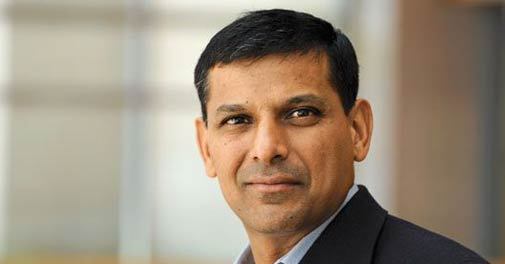
Yesterday, June 18, 2016, Raghuram Rajan in an email address to his staff in RBI communicated that he is not going to seek an extension to his term as a RBI governor, which is ending on September 4, 2016 and will be going back to academia. The timing of his decision is debatable considering the upcoming Brexit voting but his decision may not be debatable considering recent mud-slinging on him.

Three years ago when then Prime Minister Manmohan Singh appointed Raghuram Rajan as RBI governor, I wrote about Rajan's challenges of dealing with Impossible Trinity. When he was appointed in 2013, India was facing problems of decade low growth rate, tumbling domestic currency and double digit consumer inflation.

A quick glance at Rajan's term shows us that he quite successfully dealt with all major problems through monetary policy framework. Immediately after taking the charge he helped the domestic banks to tap large chunk of legitimate foreign funds as deposits in India, which minimized the pressure on Rupee and reduced the volatility on a greater extent.

Under his leadership, RBI changed the inflation watch from old fashioned WPI index to more relevant CPI index and built consensus along with the government of getting a mandate of CPI inflation target 5% by March 2017. During three years of his tenure as RBI governor, he quite successfully brought down CPI inflation from about 11% to 5.7% and now on track to achieve the target. After being inflation warrior during his initial tenure, he adopted to monetary accommodative stance in latter part as he achieved the inflation controlling task.

In addition to monetary policy regulation, he managed to intervene before non performing assets of banking sector spread further and burst. Also, Rajan brought in more competition in banking sector by giving new licenses.

Now the big question for Narendra Modi and his government is who is going to fill the big void created due to Rajan's exit (Rexit). How the government will manage to change the perception of manner in which Rexit happened?

Friday, December 13, 2013

Will Fed’s QE taper talk topple Rupee again?


When U.S. Federal Reserve chairman Ben Bernanke spoke of reducing bond buying quantity (Presently Fed is buying $85 billion per month and the program is popularly known as QE, quantitative easing) first time in the month of May, markets were surprised and spooked.

U.S. Benchmark 10 year treasury yields jumped more than 100 basis points within a short duration, equity markets throughout the globe slumped, hot money from emerging markets started flowing out, developing countries’ currencies tanked and Indian Rupee was the worst performer of the league. Rupee touched historical all time low of about 69 per dollar in August from as high as 53 per dollar in May.

After continuous speculation in the markets, markets were prepared for QE tapering in September, but Fed took a cautious call not to taper and surprised markets again.

Following 2 successive months of Non Farm Payrolls jobs data around/above 200,000 and unemployment rate falling to 7%, there is again speculation of tapering in the markets. Timing and quantity of the tapering is a debatable question but will that talk of tapering cause volatility in forex markets again? Will Rupee again tank to such drastic level with such aggressive bearish bets.

I think, pace and level of volatility what we saw after Chairman Bernanke comments in May were too fast and too much and that may not repeat if tapering happens also. Obviously there will be some reversal in recent gains attained by Rupee as whenever U.S. sneezes rest of the world catches cold! So there may be slide in the level of Rupee but with not such aggressive pace and the level, seen earlier because of the following five reasons.

Priced in the market
Tapering news was new when Chairman Bernanke spoke about it in the month of May. After that various regional-Fed presidents either talked against it or in support of it. Markets participants started analysing for and against the tapering. Markets were prepared for tapering in September month’s Federal Reserve meeting itself. So this time whenever it happens or mere talk of tapering may not cause such drastic moves in Rupee markets as it is already priced in the markets that eventually tapering had to be done, it’s just a matter of time and quantity.

Bond yields
When Bernanke talked about it first time in May, Benchmark 10 year treasury yields were as low as 1.6% and now they are trading at 2.8%. Talking about Indian government 10 year bond yields, they were around 7.5% in May and now trading at around 9%. Both the countries yields are elevated levels indicating tighter liquidity scenario in coming months and looks like they are prepared for tapering.

Current account
Indian current account deficit (CAD), the difference between outflow and inflow of foreign exchange, was one of the worst among the emerging countries. But CAD reduced substantially over the last quarter. India's current account deficit narrowed sharply to $5.2 billion, or 1.2% of GDP, in the July-September quarter of 2013-14 on the back of turnaround in exports and decline in gold imports. Thanks to RBI and governments moves to curb the gold imports and improvement in exports helped by Rupee depreciation as well as recovery in global economy. The current account deficit was USD 21 billion, or 5 per cent of the GDP, in the second quarter of last fiscal. On Sequential basis also CAD improved from $26.9 billion in previous quarter.

Bottoming out of growth rate
India’s gross domestic production growth rate on decline from 2010 peak and it seems that it is bottoming out around 4.5% - 5% levels. GDP expanded 4.8% in the three months ended 30 September, compared with 4.4% in the preceding quarter. From last 4 quarters Indian GDP is hovering around 4.675% (4.8%, 4.4%, 4.8% 4.7% in reverse order) indicating the bottoming out of the Indian GDP growth rate.

Rajan effect
After Raghuram Rajan became RBI governor, markets showed confidence in his ability and credibility to curb the inflation, bond market reforms, clear communication with market participants and forward guidance. His strategy to attract Dollar deposits through FCNR route helped Rupee to regain some of the losses in the forex market. His shifting focus towards CPI inflation from WPI inflation is good for Indian economy in longer run, even though it may hurt in immediate future. After yesterday’s CPI inflation of around 11%, Rajan may increase repo rate by another 25 basis points in next week’s meeting, which indeed in turn helps Rupee as hot money will be chasing for high yields.

Saturday, November 9, 2013

Raghuram Rajan’s balancing act of (im)possible trinity


When Raghuram Rajan took over the charge of the governorship of Reserve Bank of India (RBI), India was facing multiple issues. Because of Federal Reserve bond buying tapering speculation (at that time) hot money started flowing out of the emerging countries and India was no different. In addition to that India's unsustainable current account deficit (CAD) fuelled the bearish sentiment of the Rupee. It was the worst performer among the emerging countries currencies.

Meanwhile, then governor D. Subbarao hiked Marginal Standing Facility (MSF) by 200 basis points to prevent the currency outflow and so called excessive speculation. MSF is the rate at which banks borrow from the RBI in times of tight liquidity and it used to be 100 basis points above repo rate. Markets started speculating about RBI’s next possible move of capital controls, which Finance Minister and RBI governor denied repetitively.

Furthermore, India’s growth rate was (is) at its lowest pace in a decade. Inflation dilemma was continuing due to divergence between high level of CPI and moderate levels of WPI. Everybody was contemplating new governor’s stance on monetary policy at this crucial state of the economy.

Governor Rajan was supposed to prevent free fall of rupee, manage market expectation of not pursuing capital controls and have a monetary policy which is independent of all this. Which is impossible trinity and as name suggest it’s practically impossible to achieve all three at the same time.

In his first monetary policy meeting he took two important decisions.

1. Increasing repo rate by 25 basis points and decreasing MSF rates by 75 points. By doing this he took first step towards managing market expectations of not pursuing capital controls and at the same time he stressed upon the anchoring inflation and inflation expectations. By taking these steps he walked towards achieving two legs of the impossible trinity, i.e. free capital movement and independent monetary policy.

2. Providing the Dollar-Rupee swap facility for dollar funded deposits which helped India to attract nearly $12 billion in less than two months from then. This took care of Indian rupee depreciation and rupee recovered from its lowest levels. Third leg of the impossible trinity talks about fixed exchange rate, in which India doesn’t operate as Indian currency is partially pegged one.

Meanwhile, other factors like tapering postponement and Central government's efforts to curtail CAD also helped the market sentiments.

But credit must be given to governor Rajan as he is doing tricky job of balancing the impossible trinity of free capital flows, exchange rate (managed, not fixed in this case) and independent monetary policy, which is anchoring inflation.

Thursday, October 31, 2013

Rajanomics and its decoding


Prannoy Roy of NDTV discussing overall Indian economic situations like Inflation, Growth (faltering), Sovereign rating and Rupee volatility with RBI governor Raghuram Rajan.  
For Video: Click here

Thursday, September 5, 2013

Raghuram Rajan: Governorship is not meant to win votes or Facebook “likes”!


Yesterday, 4th September, Raghuram Rajan took the charge of Reserve Bank of India (RBI) governor’s role from outgoing D. Subbarao.  He started his first day with a bang, effectively communicating his priorities, by this he has taken care of recent criticism faced by RBI of not communicating clearly!

To begin with, he acknowledges the fact that “the economy faces challenges” and “these are not easy times” and at the same time he tried to calm the nerves by saying “India is a fundamentally sound economy with a bright future”.

Never say “Never”!

Rajan said “
A central bank should never say “Never”!” meaning RBI is ready to take all possible options available on the table. Also he made it clear that RBI should emphasise on “transparency and predictability”. In these volatility times he wants “RBI should be a beacon of stability as to its objectives” so that markets should know what central banker is doing where it is going.

Monetary Policy

As reported earlier, RBI postponed previously set meeting on 18th September to 20th September. Rajan said he postponed it to “have enough time to consider all major developments in the required detail”,  indirectly he is saying he wants to take calculated move after watching policy guidance from United States Federal Reserve meeting scheduled on September 17-18.

He talked about “monetary stability” (different from “price stability”) to emphasize confidence in the Rupee. This is a welcome change in the RBI’s usual language of “price stability” and also “monetary stability” takes care of value of currency, inflation and source of inflation.

Inclusive Development

Rajan said “the RBI will shortly issue the necessary circular to completely free bank branching for domestic scheduled commercial banks in every part of the country. No longer will a well-run scheduled domestic commercial bank have to approach the RBI for permission to open a branch” to give importance to rural banking and small and medium scale industries’ funding.

He said Dr. Bimal Jalan will head a committee to screen the licence applications for new banking licences and hope to announce the licences within, or soon after January 2014. Further he said going ahead RBI will simplify the process of banking licences and banking domain entry.

He stressed about reduction of banks investment in government securities in a calibrated way, which will improve banks productivity and competitiveness.

He talked about foreign banks and their expansion plans but with certain regulations, so that RBI is not blindsided by international developments.

Financial Markets

Rajan talked about liberalising financial markets and restrictions on investment and position taking. So that investors take positions domestically and provide depth and profits to our economy than they take our markets to foreign shores.

He talked about increasing the permitted value of re-booking of cancelled forward exchange contracts for exporters and importers, developing domestic money markets and government securities and introducing interest rate futures on overnight interest rates.

Rupee internationalization and Capital Inflows

In Rajan’s words, “this might be a strange time to talk about rupee internationalization, but we have to think beyond the next few months. As our trade expands, we will push for more settlement in rupees. This will also mean that we will have to open up our financial markets more for those who receive rupees to invest it back in. We intend to continue the path of steady liberalisation. The RBI wants to help our banks bring in safe money to fund our current account deficit”.

Financial Infrastructure

To improve the reach, speed of flows as well as quality and quantity of lending he said strong financial infrastructure is need of the hour. He talked about using Adhaar, and information sharing between credit bureaus and rating agencies.

He talked about the cleaning up of banks balance sheets, bad loan problems and capital raising programs, which might face difficulties in a decelerating growth rate. He pressed for recovering loans, improving of the recovery system and related institutions.

Households

He announced Inflation Indexed Savings Certificates linked to the CPI New Index, to protect the households against CPI inflation. He said electronic bill payment system through bank accounts to “make payments anywhere anytime a reality” and mobile based payment, which can be a revolution if implemented successfully. RBI will facilitate for mini ATMs by non-bank entities.

In conclusion he said, “It involves considerable change, and change is risky. But as India develops, not changing is even riskier. Some of the actions I take will not be popular. The Governorship of the Central Bank is not meant to win one votes or Facebook “likes”. But I hope to do the right thing, no matter what the criticism, even while looking to learn from the criticism”.

Indian equity markets and rupee welcomed Rajan with a rally and brokerages have increased their target levels. Rajan started with a bang, but walking the talk is important now and his path (read my earlier post: Raghuram Rajan’s Trilemma) is not easy. 

Thursday, August 29, 2013

Rupee is what rupee does!

Exactly, headline is derived from economic definition of money, "money is what money does", which is applicable to Rupee too. As per economic definition, value of Rupee is determined by its purchasing power parity (PPP) compared to international standards. But is this definition holds true in this turmoil markets? I don't think so.

In recent days Rupee depreciation or speed of depreciation has not only become big issue domestically but also international commentators are expressing their opinions. There are various research reports available in markets now on Rupee’s next target. Some brokerage houses are predicting it will touch 70+ against Dollar and some are telling it will go back to 60/Dollar. Now everybody is watching whether Rupee will touch 70 before 60 or 60 before 70.

Most of us by now know the macroeconomic issues India is facing due to which currency is moving in this fashion. But here I am trying figure out how things change in the micro level or ground level.

Till early May of this year currency wasn’t our big news or concern, analysts were thinking about macro issues like current account deficit, fiscal deficit, inflation, RBI’s stance on monetary policy and etc. By this logic nothing substantial happened on macro front, which wasn’t priced in the market at that time.

But in May U.S. Federal Reserve chairman Ben Bernanke first time talked about scaling back the monetary stimulus (Fed is buying $85 billion worth of bonds every month) because of moderate growth in U.S. economy. Immediately after his statement bond markets reacted very sharply and bond yields started spiking. At that time U.S. Benchmark 10 year bond yields where trading roughly around 1.6% and Indian benchmark yields where around 8% as shown in the below two graphs.


Investors were coming to India as there was arbitrage opportunity or interest rate parity due to yield spread between the two countries. Even after incurring currency hedging cost of around 6% foreign investors were making 2% (8% bond yield – 6% currency hedging cost) risk free return.

But once U.S. bond yield crossed that crucial 2% level investors thought investing in U.S. bonds is more profitable than investing in India with less risk. So funds from bond market started flowing out of India and till now roughly $4 billion went out of India according to one estimate.

At the same time U.S. stock markets started regaining their historical highs and were touching new highs due to which money from equity markets also started changing hands. Because of outward movement of money Dollar demand increased and Rupee started depreciating as shown in the third graph. But after initial sell-off in the currency market, sentiments drove the markets with more speed and quantity leading to panicking situation making policy makers nervous! Policy makers did take some half hearted measures and did not convince the markets either through their communication or from their actions leading to rout in the markets!

After this heavy sell-off Finance Minister and some analysts are saying Rupee is undervalued due to overshooting of currency markets. One of the popular indexes to measure the valuation of the currency is Big Mac Index. It gives a rough picture of how a country’s currency is trading in real exchange terms or purchasing power parity. It compares cost of Big Mac of McDonalds in U.S. with other countries.

McDonalds’ Big Mac not sold in India since beef is not common; but it is replaced by Maharaja Mac made up of Chicken. As per latest available data cost of Big Mac in U.S. is $4.56 and Maharaja Mac in India is Rs. 100. So PPP of India is 21.93 (100/4.56). According to Big Mac Index Indian Rupee is undervalued 68% [(21.93 – 67.5)/67.5]. Here I have taken 67.5 as exchange rate of Rupee. Indian currency is the most undervalued currency as per Big Mac Index. 

Wednesday, August 7, 2013

Raghuram Rajan's Trilemma


Yesterday, 6th August, 2013 Prime Minister Manmohan Singh appointed Raghuram Rajan as next Reserve Bank of India's governor for 3 years. Rajan will take the charge from present RBI governor D. Subbaroa whose term is ending on September 4, 2013.

Rajan is taking charge at a crucial stage of economic cycle, where India's growth rate is at decade low, currency is depreciating, CPI denominated inflation is high even though wholesale and its core inflation is under RBI's comfort zone. Its like Rajan will be under the pressure of Trilemma (or also famously known as Impossible Trinity) wherein he has to manage currency, capital flows and independence of monetary policy. In theory it is considered to be impossible to achieve all three at the same time and this is what Raghuram Rajan will be facing!

In recent months capital is flowing out from the emerging countries after U.S. Federal Reserve officials started giving hint of tapering down of monetary stimulus know as Quantitative Easing. These capital outflows aggravated in India as economy was not growing at its potential, has current account deficit problem, government is in back-foot in decision making after series of corruption scams and etc. As a result of this Rupee is leading the depreciation pack in Asia and touching new lows.

To reduce the volatility in foreign exchange as it is claimed by central bank, RBI came into markets in intervals and started selling Dollars. Also took several decisions including liquidity tightening, making gold importing non-conducive and so called Open Market Operation. But it looked like RBI was forced to take certain steps as per its communication with markets and its participants. Which is third leg of Trilemma.

During same time RBI was facing growth concern issues as Indian economy was growing around 5 percent, slowest pace in decade and bottom was not sight! Wholesale inflation was just started reducing from couple of years' double digit mark, so RBI started reducing interest rates.

But thanks to capital outflows and Rupee depreciation, RBI (or forced to) jumped to forex management by tightening liquidity and asking public sector banks to sell dollars on its behalf.

Now RBI caught in between Rupee management, liquidity (or in other term capital flows) control, growth acceleration and getting back the credibility of the independence of monetary authority! Its now Raghuram Rajan trilemma!