Tuesday, September 17, 2013

Bernanke may be worried about Greenspan legacy!


According to various polls and forecasts U.S. Federal Reserve Chairman Ben Bernanke is expected to announce scaling back the monetary stimulus in the FOMC meeting (17th &18th September). As per consensus Fed is expected to cut down its monthly bond buying program by $10 billion from present $85 billion (Fed is buying $45 billion government bonds and $40 billion mortgage securities per month to stimulate the economy).

When Bernanke spoke about tapering down of bond buying program first time in May, 2013 global markets reacted very sharply. U.S. bond yields soared, emerging countries’ bond, stock and currency markets sold off heavily and some counties' (Brazil and Indonesia) Central banks raised interest rates to prevent outflow.
Aftermath of the global markets volatility, analysts started discussing timing and quantity of Fed tapering, whether American economy produced enough employment, whether economy recovered from the crisis, if yes then is this recovery sustainable?

But Bernanke may not be worried about timing (September or December) of tapering or quantity of tapering but the way markets are expecting and perceiving the quantitative easing (QE)! He may be worried about QE boosting asset prices than real economy going ahead. He may be worried about market expectations of low interest rate for too long. He may be worried about continuing his policies in his name after his exit from Fed Chair in January 2014. He may be worried about how history is going to see him, the one who saved the world from the great recession or the one who lead the world from the great recession to one more crisis!


Alan Greenspan, Bernanke’s predecessor lowered American interest rates after dot com bubble burst and 9/11 attack. Analysts criticise him for leaving interest rates too low for too long time, which was one of the reason for housing boom during early 2000. By the time Greenspan left Fed Chair (January 2006) American economy was at the edge of new crisis. Housing prices skyrocketed and it was too late for regulation and monitoring the situation as complex derivatives products dragged investments banks, insurance companies, banks, broking firms and rating agencies into the sector leading to economic crisis. So critics say Greenspan lead America from one crisis to another crisis!

Bernanke, whose term is ending in January 2014, may not want to repeat the Greenspan legacy! He may want to communicate to markets that stimulus shouldn't be taken for granted. He may be suggesting real economy benefitted sufficiently from quantitative easing or monetary stimulus has reached its limits to boost the economy and beyond this there might be bubble formation! He may want to leave the office with a note to historians stating that he started it (QEs) but he also tried to end it!

Thursday, September 5, 2013

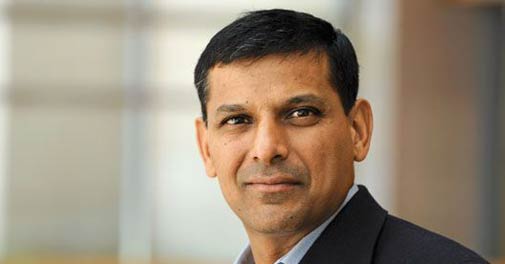
Raghuram Rajan: Governorship is not meant to win votes or Facebook “likes”!


Yesterday, 4th September, Raghuram Rajan took the charge of Reserve Bank of India (RBI) governor’s role from outgoing D. Subbarao.  He started his first day with a bang, effectively communicating his priorities, by this he has taken care of recent criticism faced by RBI of not communicating clearly!

To begin with, he acknowledges the fact that “the economy faces challenges” and “these are not easy times” and at the same time he tried to calm the nerves by saying “India is a fundamentally sound economy with a bright future”.

Never say “Never”!

Rajan said “
A central bank should never say “Never”!” meaning RBI is ready to take all possible options available on the table. Also he made it clear that RBI should emphasise on “transparency and predictability”. In these volatility times he wants “RBI should be a beacon of stability as to its objectives” so that markets should know what central banker is doing where it is going.

Monetary Policy

As reported earlier, RBI postponed previously set meeting on 18th September to 20th September. Rajan said he postponed it to “have enough time to consider all major developments in the required detail”,  indirectly he is saying he wants to take calculated move after watching policy guidance from United States Federal Reserve meeting scheduled on September 17-18.

He talked about “monetary stability” (different from “price stability”) to emphasize confidence in the Rupee. This is a welcome change in the RBI’s usual language of “price stability” and also “monetary stability” takes care of value of currency, inflation and source of inflation.

Inclusive Development

Rajan said “the RBI will shortly issue the necessary circular to completely free bank branching for domestic scheduled commercial banks in every part of the country. No longer will a well-run scheduled domestic commercial bank have to approach the RBI for permission to open a branch” to give importance to rural banking and small and medium scale industries’ funding.

He said Dr. Bimal Jalan will head a committee to screen the licence applications for new banking licences and hope to announce the licences within, or soon after January 2014. Further he said going ahead RBI will simplify the process of banking licences and banking domain entry.

He stressed about reduction of banks investment in government securities in a calibrated way, which will improve banks productivity and competitiveness.

He talked about foreign banks and their expansion plans but with certain regulations, so that RBI is not blindsided by international developments.

Financial Markets

Rajan talked about liberalising financial markets and restrictions on investment and position taking. So that investors take positions domestically and provide depth and profits to our economy than they take our markets to foreign shores.

He talked about increasing the permitted value of re-booking of cancelled forward exchange contracts for exporters and importers, developing domestic money markets and government securities and introducing interest rate futures on overnight interest rates.

Rupee internationalization and Capital Inflows

In Rajan’s words, “this might be a strange time to talk about rupee internationalization, but we have to think beyond the next few months. As our trade expands, we will push for more settlement in rupees. This will also mean that we will have to open up our financial markets more for those who receive rupees to invest it back in. We intend to continue the path of steady liberalisation. The RBI wants to help our banks bring in safe money to fund our current account deficit”.

Financial Infrastructure

To improve the reach, speed of flows as well as quality and quantity of lending he said strong financial infrastructure is need of the hour. He talked about using Adhaar, and information sharing between credit bureaus and rating agencies.

He talked about the cleaning up of banks balance sheets, bad loan problems and capital raising programs, which might face difficulties in a decelerating growth rate. He pressed for recovering loans, improving of the recovery system and related institutions.

Households

He announced Inflation Indexed Savings Certificates linked to the CPI New Index, to protect the households against CPI inflation. He said electronic bill payment system through bank accounts to “make payments anywhere anytime a reality” and mobile based payment, which can be a revolution if implemented successfully. RBI will facilitate for mini ATMs by non-bank entities.

In conclusion he said, “It involves considerable change, and change is risky. But as India develops, not changing is even riskier. Some of the actions I take will not be popular. The Governorship of the Central Bank is not meant to win one votes or Facebook “likes”. But I hope to do the right thing, no matter what the criticism, even while looking to learn from the criticism”.

Indian equity markets and rupee welcomed Rajan with a rally and brokerages have increased their target levels. Rajan started with a bang, but walking the talk is important now and his path (read my earlier post: Raghuram Rajan’s Trilemma) is not easy. 

Thursday, August 29, 2013

Rupee is what rupee does!

Exactly, headline is derived from economic definition of money, "money is what money does", which is applicable to Rupee too. As per economic definition, value of Rupee is determined by its purchasing power parity (PPP) compared to international standards. But is this definition holds true in this turmoil markets? I don't think so.

In recent days Rupee depreciation or speed of depreciation has not only become big issue domestically but also international commentators are expressing their opinions. There are various research reports available in markets now on Rupee’s next target. Some brokerage houses are predicting it will touch 70+ against Dollar and some are telling it will go back to 60/Dollar. Now everybody is watching whether Rupee will touch 70 before 60 or 60 before 70.

Most of us by now know the macroeconomic issues India is facing due to which currency is moving in this fashion. But here I am trying figure out how things change in the micro level or ground level.

Till early May of this year currency wasn’t our big news or concern, analysts were thinking about macro issues like current account deficit, fiscal deficit, inflation, RBI’s stance on monetary policy and etc. By this logic nothing substantial happened on macro front, which wasn’t priced in the market at that time.

But in May U.S. Federal Reserve chairman Ben Bernanke first time talked about scaling back the monetary stimulus (Fed is buying $85 billion worth of bonds every month) because of moderate growth in U.S. economy. Immediately after his statement bond markets reacted very sharply and bond yields started spiking. At that time U.S. Benchmark 10 year bond yields where trading roughly around 1.6% and Indian benchmark yields where around 8% as shown in the below two graphs.


Investors were coming to India as there was arbitrage opportunity or interest rate parity due to yield spread between the two countries. Even after incurring currency hedging cost of around 6% foreign investors were making 2% (8% bond yield – 6% currency hedging cost) risk free return.

But once U.S. bond yield crossed that crucial 2% level investors thought investing in U.S. bonds is more profitable than investing in India with less risk. So funds from bond market started flowing out of India and till now roughly $4 billion went out of India according to one estimate.

At the same time U.S. stock markets started regaining their historical highs and were touching new highs due to which money from equity markets also started changing hands. Because of outward movement of money Dollar demand increased and Rupee started depreciating as shown in the third graph. But after initial sell-off in the currency market, sentiments drove the markets with more speed and quantity leading to panicking situation making policy makers nervous! Policy makers did take some half hearted measures and did not convince the markets either through their communication or from their actions leading to rout in the markets!

After this heavy sell-off Finance Minister and some analysts are saying Rupee is undervalued due to overshooting of currency markets. One of the popular indexes to measure the valuation of the currency is Big Mac Index. It gives a rough picture of how a country’s currency is trading in real exchange terms or purchasing power parity. It compares cost of Big Mac of McDonalds in U.S. with other countries.

McDonalds’ Big Mac not sold in India since beef is not common; but it is replaced by Maharaja Mac made up of Chicken. As per latest available data cost of Big Mac in U.S. is $4.56 and Maharaja Mac in India is Rs. 100. So PPP of India is 21.93 (100/4.56). According to Big Mac Index Indian Rupee is undervalued 68% [(21.93 – 67.5)/67.5]. Here I have taken 67.5 as exchange rate of Rupee. Indian currency is the most undervalued currency as per Big Mac Index. 

Friday, August 16, 2013

Do policy makers have any other option?

After recent Federal Reserve meeting, when Chairman Ben Bernanke’s commented about tapering of bond buying program, global financial markets have become very volatile. U.S. benchmark 10 year treasury yields touched 2.8% recently from 1.6% in early May. Hot money started flowing out of emerging markets (EM) following some kind of theme like sell EMs and buy U.S.!

As a result of this majority of emerging countries’ stock and bonds sold-off, currencies started depreciating. Being part of globalized world now, India too is going through all these market phases. Apart from global issues, India has its own problems like large current account deficit, corruption and scandals, policy paralysis making it as non-favorable destination for investment at least for now. Indian growth, measured in terms of GDP, slowed to 5% levels from above 9% levels, Industrial Production data is not showing recovery signs, Consumer Inflation still very high and whole price inflation started inching up again; currency depreciated more than 12% in 12 weeks. 

Indian central bank, RBI is under pressure to support the growth, curtail depreciation of Rupee, monitor the capital flows and has to maintain its independence. RBI is exactly in “impossible trinity”.  

Consequently government and RBI took several measures to curb the currency depreciation and capital flight from India, like hiking gold import duty couple of time, banning importing of bullion coins and medallions, asking gold importers to keep 20% of total imported gold for exports and exports-purpose, domestic liquidity tightening, reducing the limit for Overseas Direct Investment (it’s like Indian FDI abroad) from 400% of the net worth to 100% and so on.

Many commentators are now criticizing these recent policy moves and intervention in market. It’s not the question of either supporting or opposing them, whether policy makers have any other option which will help them in near term? Of course there should not be any second thought on long term plans to correct the fundamentals; but what about immediate future as Keynes famously said “In the long run we are all dead”. 

This brings back the old question, whether markets are efficient or in other terms does efficient market hypothesis holds true? Going by Keynesian concepts and economic boom and bust cycles it does appear like markets need an invisible-hand to guide them and calm the nerves. But that again depends on how big that invisible-hand is, how far it is non-conventional in its approach and how much market is ready to listen to it and trust. Only time will tell!

Wednesday, August 7, 2013

Raghuram Rajan's Trilemma


Yesterday, 6th August, 2013 Prime Minister Manmohan Singh appointed Raghuram Rajan as next Reserve Bank of India's governor for 3 years. Rajan will take the charge from present RBI governor D. Subbaroa whose term is ending on September 4, 2013.

Rajan is taking charge at a crucial stage of economic cycle, where India's growth rate is at decade low, currency is depreciating, CPI denominated inflation is high even though wholesale and its core inflation is under RBI's comfort zone. Its like Rajan will be under the pressure of Trilemma (or also famously known as Impossible Trinity) wherein he has to manage currency, capital flows and independence of monetary policy. In theory it is considered to be impossible to achieve all three at the same time and this is what Raghuram Rajan will be facing!

In recent months capital is flowing out from the emerging countries after U.S. Federal Reserve officials started giving hint of tapering down of monetary stimulus know as Quantitative Easing. These capital outflows aggravated in India as economy was not growing at its potential, has current account deficit problem, government is in back-foot in decision making after series of corruption scams and etc. As a result of this Rupee is leading the depreciation pack in Asia and touching new lows.

To reduce the volatility in foreign exchange as it is claimed by central bank, RBI came into markets in intervals and started selling Dollars. Also took several decisions including liquidity tightening, making gold importing non-conducive and so called Open Market Operation. But it looked like RBI was forced to take certain steps as per its communication with markets and its participants. Which is third leg of Trilemma.

During same time RBI was facing growth concern issues as Indian economy was growing around 5 percent, slowest pace in decade and bottom was not sight! Wholesale inflation was just started reducing from couple of years' double digit mark, so RBI started reducing interest rates.

But thanks to capital outflows and Rupee depreciation, RBI (or forced to) jumped to forex management by tightening liquidity and asking public sector banks to sell dollars on its behalf.

Now RBI caught in between Rupee management, liquidity (or in other term capital flows) control, growth acceleration and getting back the credibility of the independence of monetary authority! Its now Raghuram Rajan trilemma!


Thursday, January 24, 2013

Interested people can follow me in Twitter and FB

Hi Guys,

Recently I started using Twitter and tweeting on an average daily basis and sharing information.
All my tweets are also forwarded to my Facebook professional page.
Interested people can follow me and can have a discussion and share information and learn together.

https://twitter.com/NaveenMutnal
https://www.facebook.com/pages/Naveen-Mutnals-Professional-FB-Page/168891226498055


Friday, June 29, 2012

Interesting readings

I was thinking of writing about "over dependency on Monetary Policy" from a month ago, but somehow couldn't do it. 

But never mind, a week back I read a nice report and a blog about same, here is the blog and full report of BIS (Bank of International Settlements)  

About same topic under different prospective, read a nice article in mint about Monetary Policy's lag and limited effect in Indian Inflation case.

Coming to GDP growth topic, Manas Chakravarty has collated some interesting facts about India's GDP growth and its rate compared to Indian states and Union Territories.